SmartSim Analytics
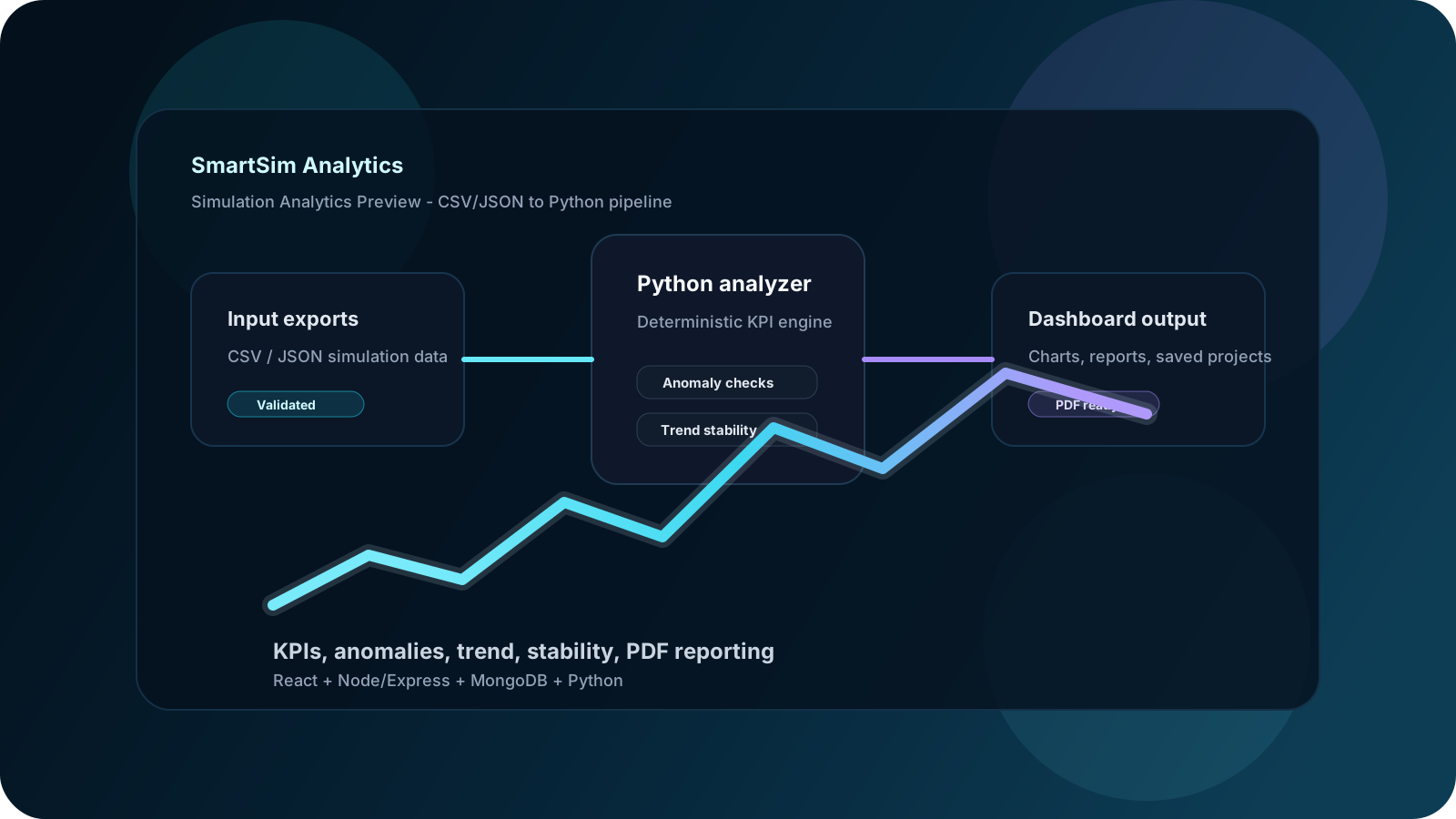
A full-stack simulation analytics platform for CSV/JSON exports, deterministic Python analysis, KPIs, anomaly detection, trend and stability checks, and PDF reporting.
GitHub
Repository available
Source code and project documentation
Live Demo
Coming soon
API Demo
Coming soon
CI / build
GitHub Actions CI configured
Problem
What needed to be solved
Simulation exports can be difficult to review manually because the data is spread across rows, signals, and multiple derived measures. Teams need a clear way to validate the input, identify anomalies, understand stability, and present findings in a format that is easy to review.
Solution
How the project approaches it
I structured SmartSim Analytics around a React frontend, a Node/Express API, MongoDB persistence, and a deterministic Python analyzer. The backend validates uploads, confines analysis to uploaded files, and runs a bounded Python script that calculates KPIs, detects anomalies, evaluates trend and stability, and returns versioned JSON for the dashboard.
Key features
What the project includes
Architecture / Technical decisions
Implementation choices worth reviewing
Validation / Quality
How I made the work reviewable
What I learned
Technical takeaway
I learned how important it is to define stable input/output contracts, keep analytics deterministic, and treat execution boundaries as part of the product rather than an afterthought.
Related work